
More about organic farming
Organic farming is about the way raw materials are grown and food is produced. When you choose organic, you are choosing a method of production with special rules and requirements, including those for cultivation, the use of pesticides, additives, labelling and control.
At DAVA, you will find organic raw materials for everyday cooking. From legumes and flour to oil, spices and baking ingredients. Here you can learn more about what lies behind the red Ø and what organic farming means for the raw materials you put in your basket.
We have roots in Danish agriculture
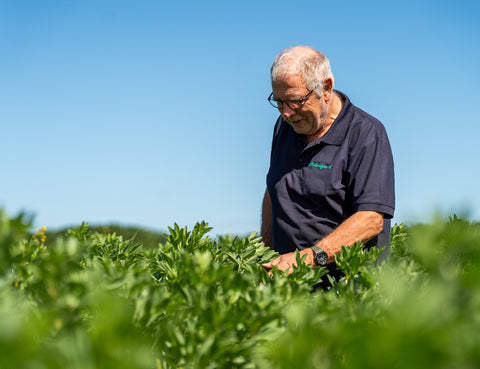
At DAVA, many of our products begin in the field. We are part of the farmer-owned Danish Agro group, and through our connection to agriculture and collaboration with Danish farmers, we have roots that go back to the raw materials our products are made from.
This applies to both our eggs and our plant-based range. We work with Danish organic seeds and legumes, among other things, which are cleaned at our own factory in Hadsund. Therefore, agriculture is naturally close to us - also when we work with organic products.
For us, organic farming is therefore not just about the label on the finished product. It is also about how the raw material is grown, what rules the farmer works by, and how the raw material is subsequently handled and processed.
Fewer pesticides
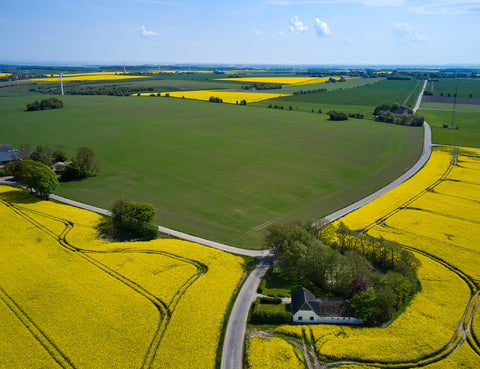
When you choose organic legumes, flour or other raw materials from the lanterite kingdom, they come from cultivation where synthetic pesticides may not be used.
However, there are a limited number of other plant protection products that may be used according to organic rules.
Therefore, prevention plays an important role in organic farming. The farmer can, among other things, work with crop rotation, resistant varieties, healthy soil and beneficial insects. Crop rotation, for example, can help create distance between a pest and the crop it attacks.
In this way, organic plant production is largely about preventing problems already in the field.
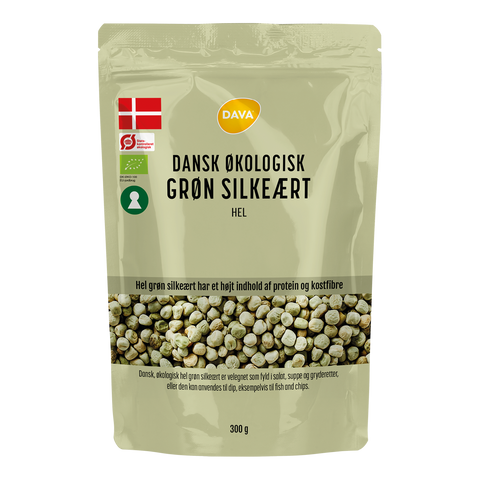
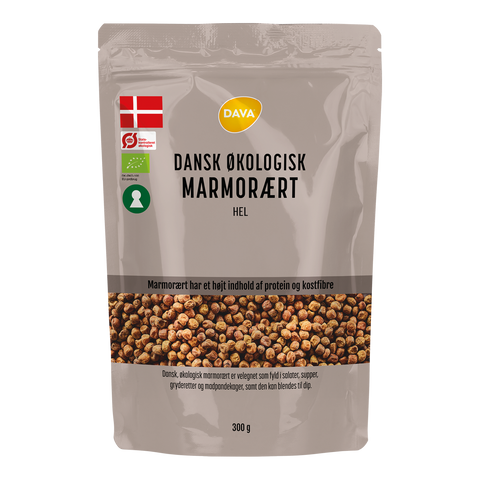
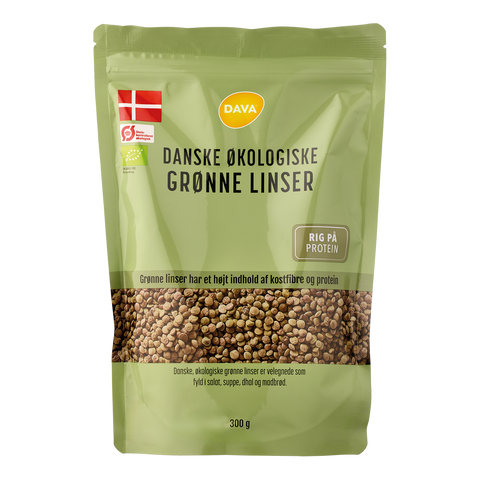
Danish, organic legumes


Fewer additives
Organic foods contain far fewer permitted additives than conventional foods.
This also applies when the raw materials are processed into the products you find on the shelf.
However, organic does not mean that a product is completely free from additives. Some are permitted when they serve a necessary function in the product. In return, for example, artificial flavourings, colourings and sweeteners may not be used in organic foods. When you choose organic products from DAVA, the Ø-label therefore tells you something concrete about both the production of the raw materials and the rules that apply to their processing.
Choose products with fewer additives


DAVA Foods supports the 'Choose Island' campaign
Behind the campaign are
The Danish Organic Association and
Danish Agriculture & Food, Organic Sector.
What do the organic labels mean?
When you shop for organic products, you often encounter two labels: the EU’s green organic label and the Danish red Ø-label.
The EU’s green organic label
The EU’s common guarantee that the product complies with European rules for organic production.
The red Ø-label
Denmark’s official organic label, indicating that Danish authorities have carried out an organic inspection of the company that most recently processed, packaged, or labelled the product in Denmark.
Both labels are based on the same basic organic rules. The difference is therefore not the level of organic standards, but where the most recent inspection was carried out.